



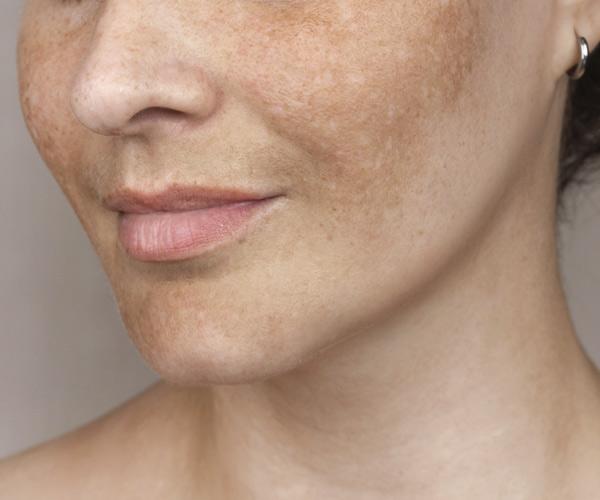
Facial pigmentation is caused by an excessive accumulation of a pigment called melanin which is naturally produced in certain circumstances to protect the DNA of other skin cells. When there is excessive sun exposure or hormonal stimulation due to pregnancy or medication, melatonin is produced in an uncontrolled way and pigmentation may appear.
Facial pigmentation is caused by an excessive accumulation of a pigment called melanin which is naturally produced in certain circumstances to protect the DNA of other skin cells. When there is excessive sun exposure or hormonal stimulation due to pregnancy or medication, melatonin is produced in an uncontrolled way and pigmentation may appear.
Can facial pigmentation be removed?
The first step is to diagnose the type of pigmentation to determine whether it can be removed. A lentigo or post-inflammatory pigmentation can be removed. Melasma is difficult to eliminate, although not impossible, and the aim is to reduce its size and colour and prevent it from worsening.
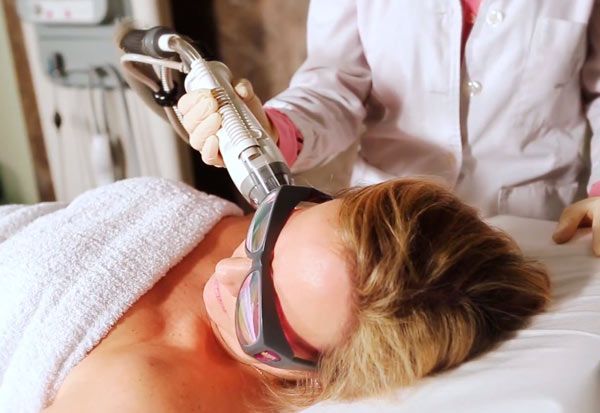
How do we remove or reduce pigmentation at Ribe Clinic?
First, we assess whether these dark spots or even very dark lesions that have appeared on the face are not malignant. Once malignancy has been ruled out, we identify the type of pigmentation involved and, depending on the diagnosis, we select the appropriate treatment to remove the pigmentation.
The laser treatment for facial pigmentation is very effective, but the type of laser used depends on the type of pigmentation, and some lasers may not be recommended.
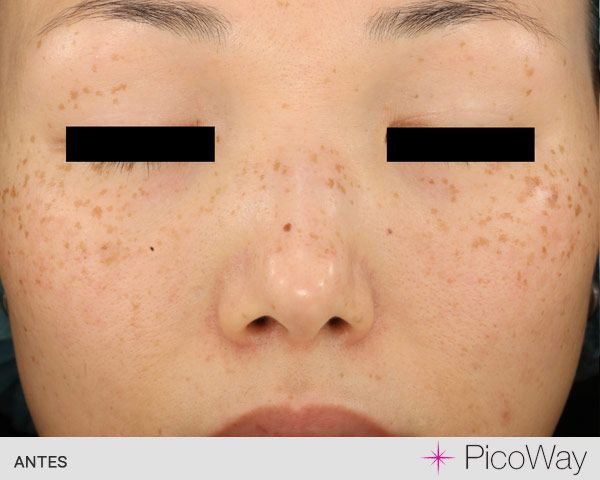
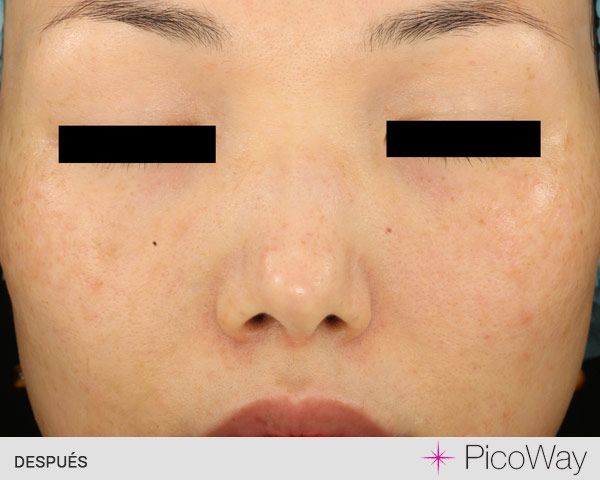
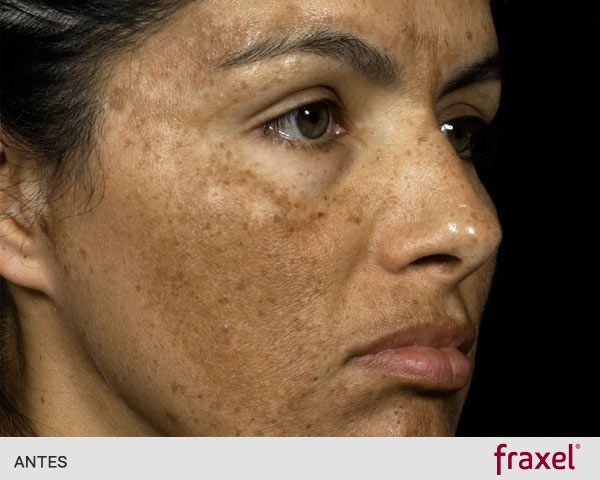
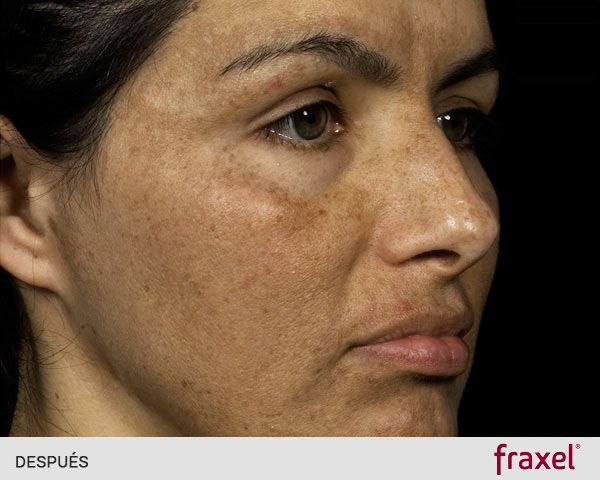
For melasma, we choose picosecond laser and/or Fraxel laser for this pigmentation, usually combined with medical creams. For a naevus (without atypia), we remove the lesion with a CO2 laser, while for lentigines we use picosecond laser and intense pulsed light (IPL).
Types of pigmentation
At Ribe Clinic, we carry out an initial consultation to assess the type of pigmentation and rule out malignancy, so that we can recommend the most suitable treatment.
We treat different types of facial pigmentation, the most common being:
Pigmentation before and after
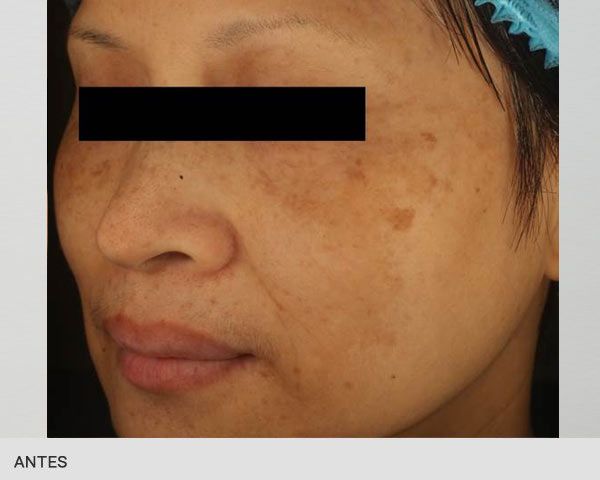
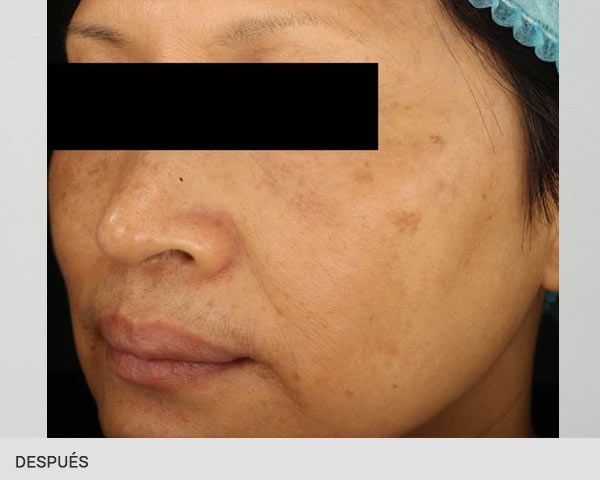
Why choose Ribe Clinic for pigmentation treatment?
The professionals at Ribe Clinic have experience in diagnosis and in the latest medical technology, which they use to treat pigmentation on the face and body. At Ribe Clinic, we have specific protocols for each type of pigmentation, years of experience and expertise in the latest technology, supporting our results.
We take part in medical research into new technologies for pigmentation treatment, giving us first-hand knowledge of the latest research and the results of the most innovative technologies.
What is melasma and how is it treated?
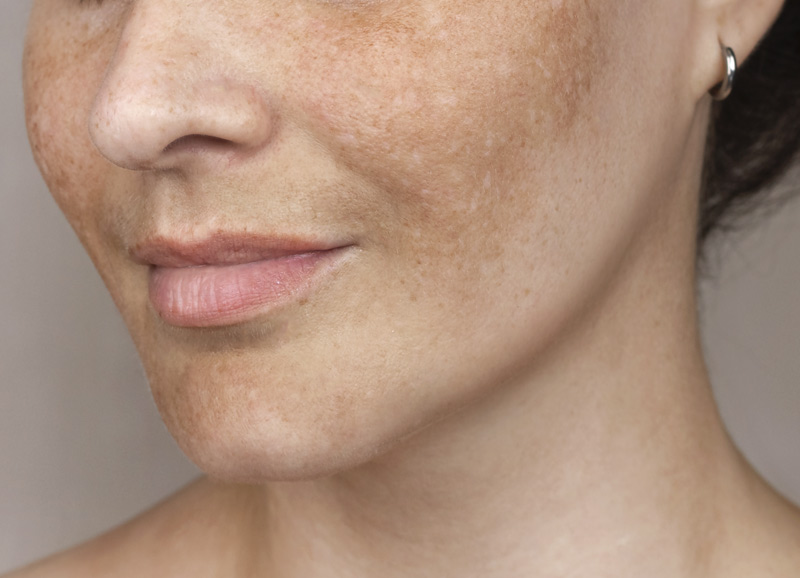
Melasma presents as much larger areas of pigmentation than lentigines, with geographic borders, usually distributed across the cheeks, upper lip and forehead. It tends to worsen significantly in summer and with sun exposure.
It often has a hormonal origin related to pregnancy, hormonal treatments or even thyroid disorders or disorders of other endocrine organs.
Treatment for melasma is complex and lengthy because it is a chronic pigmentation disorder. The only laser approved for its treatment is the Fraxel Dual laser. More recently, picosecond lasers have been used in some cases.
What is a naevus and how is it treated?
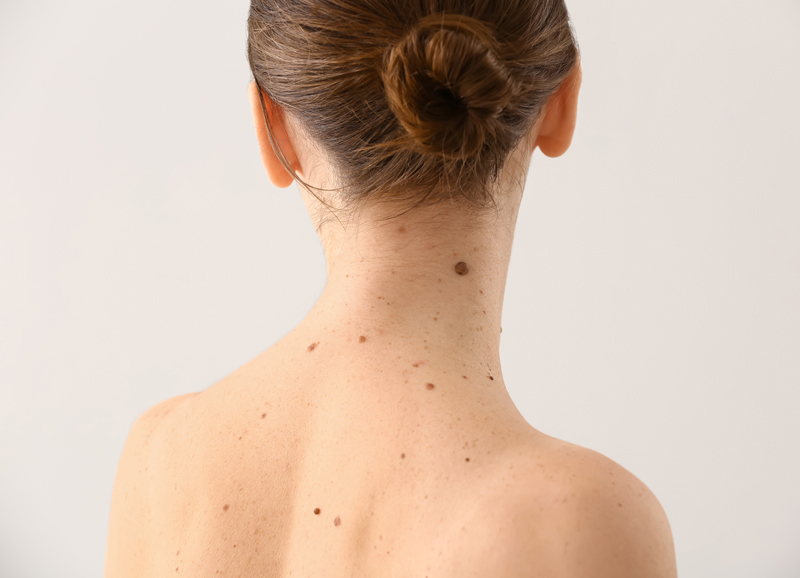
Facial naevi are commonly known as moles. Naevi are a proliferation of cells called melanocytes that cluster in nests. They may be located in the dermis, epidermis or both.
At Ribe Clinic, our professionals carry out a clinical diagnosis of pigmented lesions before treating them. If, after examination by a medical professional, these facial or body lesions are melanocytic naevi without atypia, they can be removed with a surgical CO2 laser.
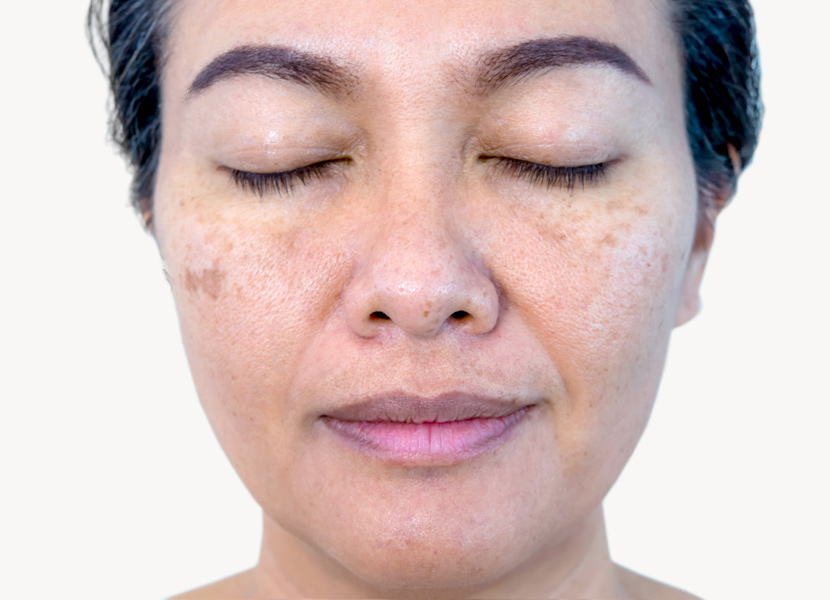
Facial pigmentation in the form of solar lentigines has a very characteristic appearance: the lesions are flat, with irregular borders and a uniform colour, resembling an ink stain. They usually appear on areas most exposed to the sun, such as the face, décolletage and hands.
They are more common in women but they also occur in men, although at a later age. A solar lentigo (also known as a senile lentigo) must be distinguished from lentigo maligna.
To remove solar lentigines from the face, we use an Alexandrite laser and, more recently, a picosecond laser. They can also be treated with intense pulsed light (IPL). The facial or body pigmentation is removed in a single session in most cases, as the emitted light destroys cells containing excess pigment without affecting the surrounding tissue.
Frequently asked questions
Why Choose Ribe Clinic

Experience and Exclusivity
Dr Adriana Ribé personally conducts consultations and performs the medical treatments.
Medical Safety
Materials and devices with QR codes and CE certification. Scientifically supported protocols.
Patient Follow-up
Follow-up appointments and direct consultations with the doctor regarding the treatments performed.

Sustainable Clinic
The first aesthetic medicine clinic committed to sustainability.